Project 04
TEAM MALIZIA
Design, data analysis and control engineering on the IMOCA Malizia 4
- Project
- TEAM MALIZIA
- Role
- Technical team · Design Office
- Organisation
- TEAM MALIZIA, Lorient
- Period
- Mar–Aug 2026
- Dwg no.
- CVW-04
- Rev
- B
1Problem
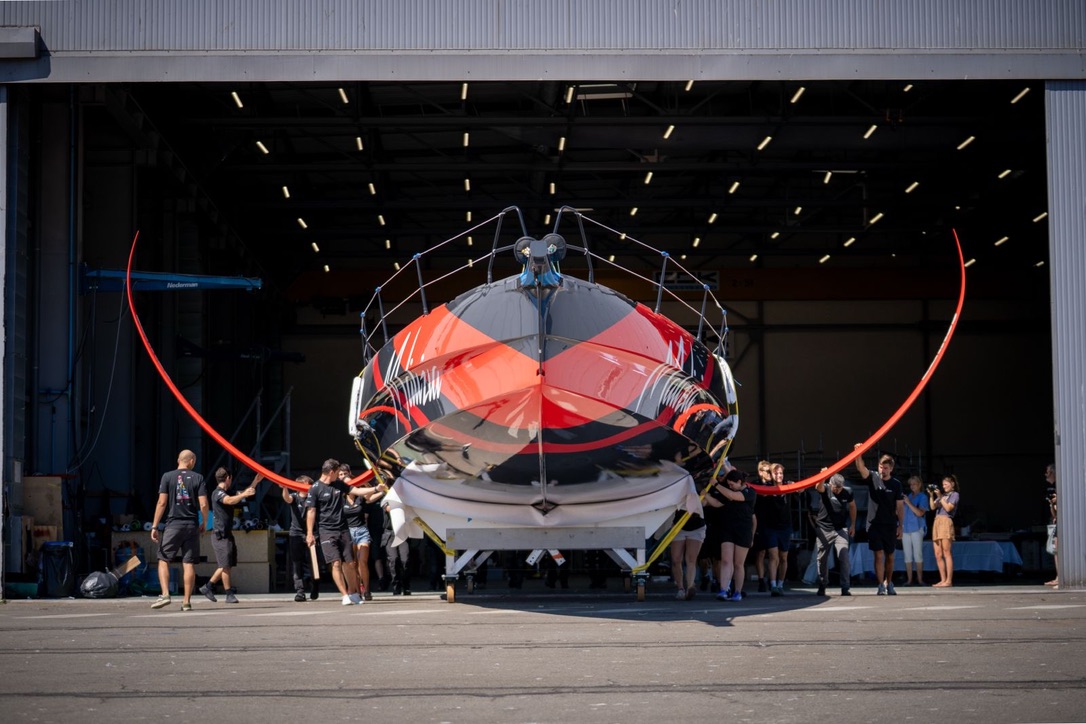
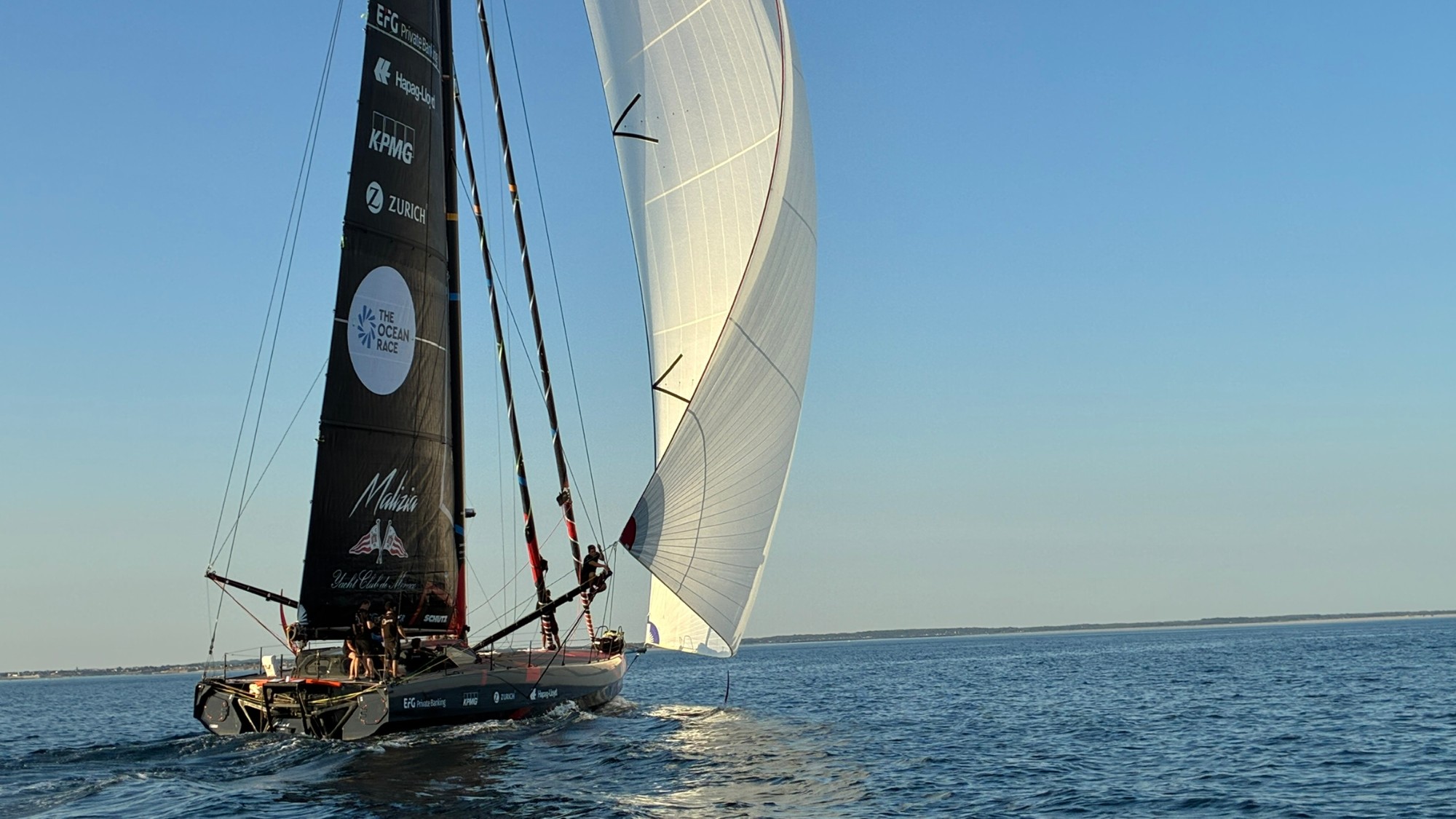
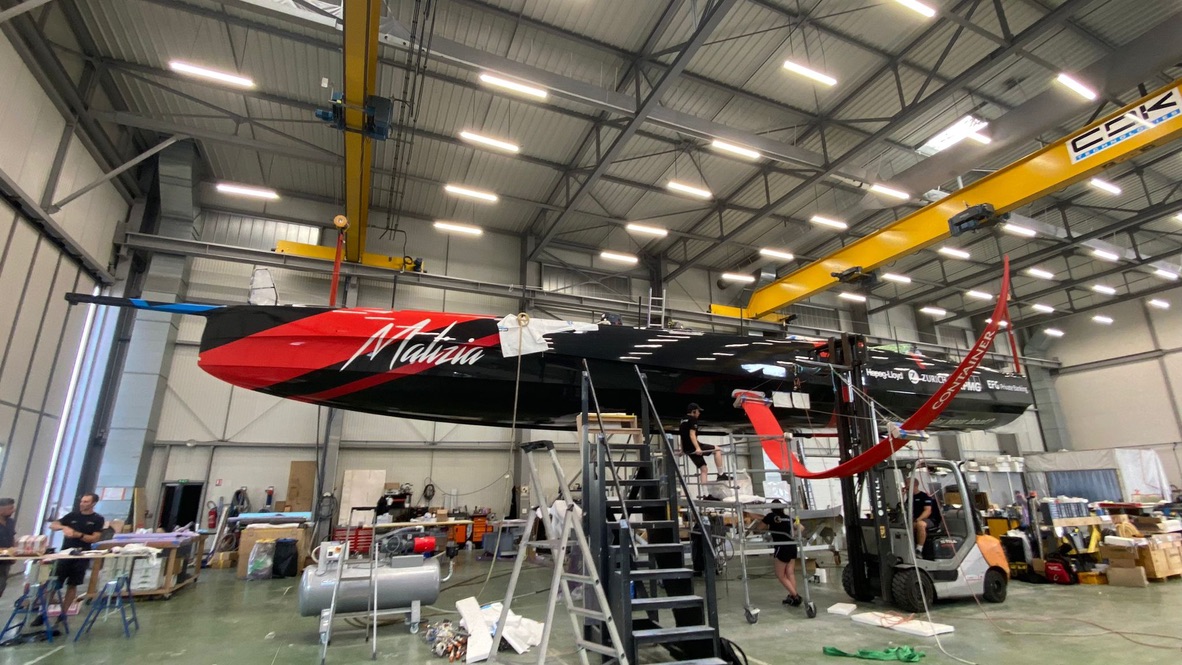
Malizia 4 is Team Malizia's new foiling IMOCA — an 18.28 m monohull designed to be sailed solo around the world. I joined for the final construction phase and the first sailing programme: the boat was designed by Antoine Koch, built at the CDK shipyard in Lorient and launched on 6 July 2026.
The engineering questions ranged from parts that have to satisfy the IMOCA class rules and survive the ocean, to understanding the boat from its sensor data and helping tune its autopilot.
2My role
Member of the technical team in the Design Office, after first working on the refit of the previous boat, Malizia 3, at 11th Hour Racing.
My work fell into three strands: CAD design, technical drawings and hands-on composite construction; analysis of onboard sensor data; and simulation and controls work supporting autopilot development.
3System overview
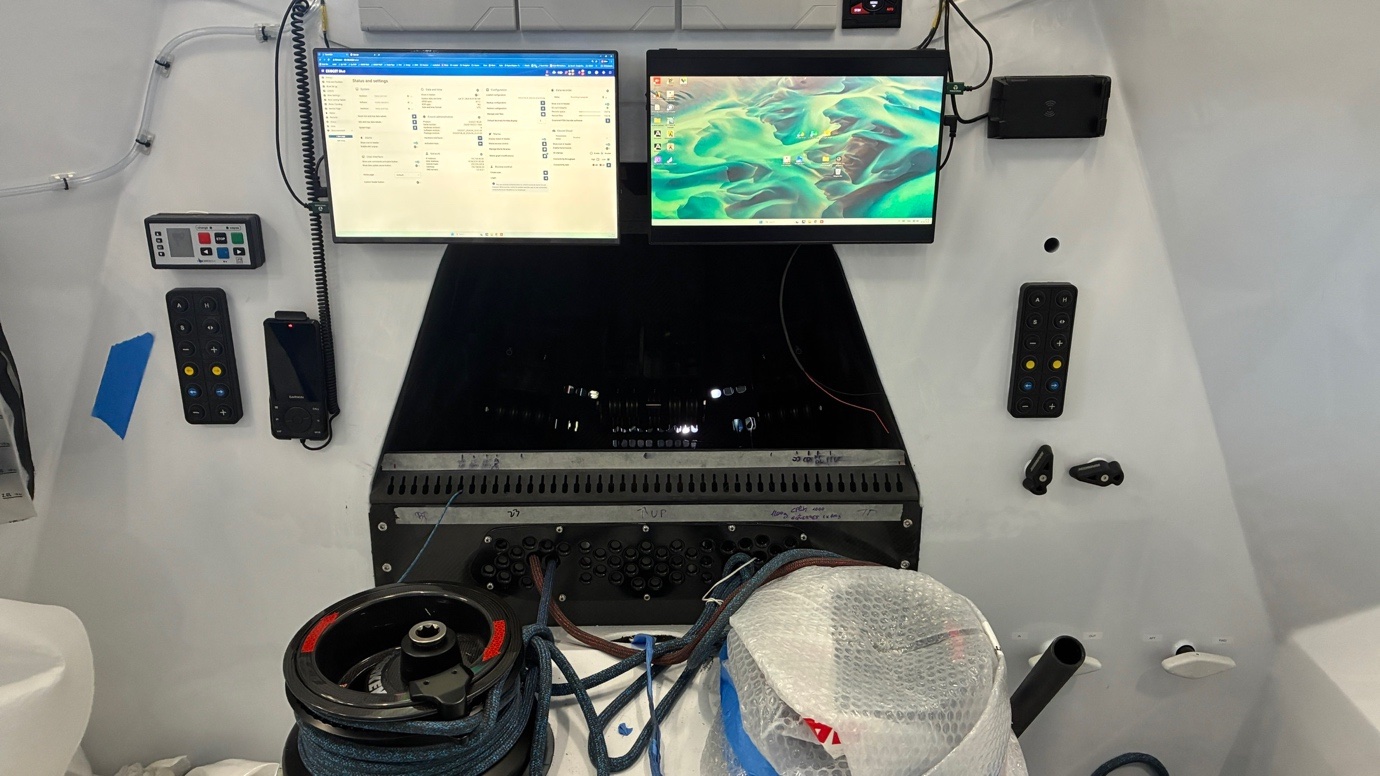
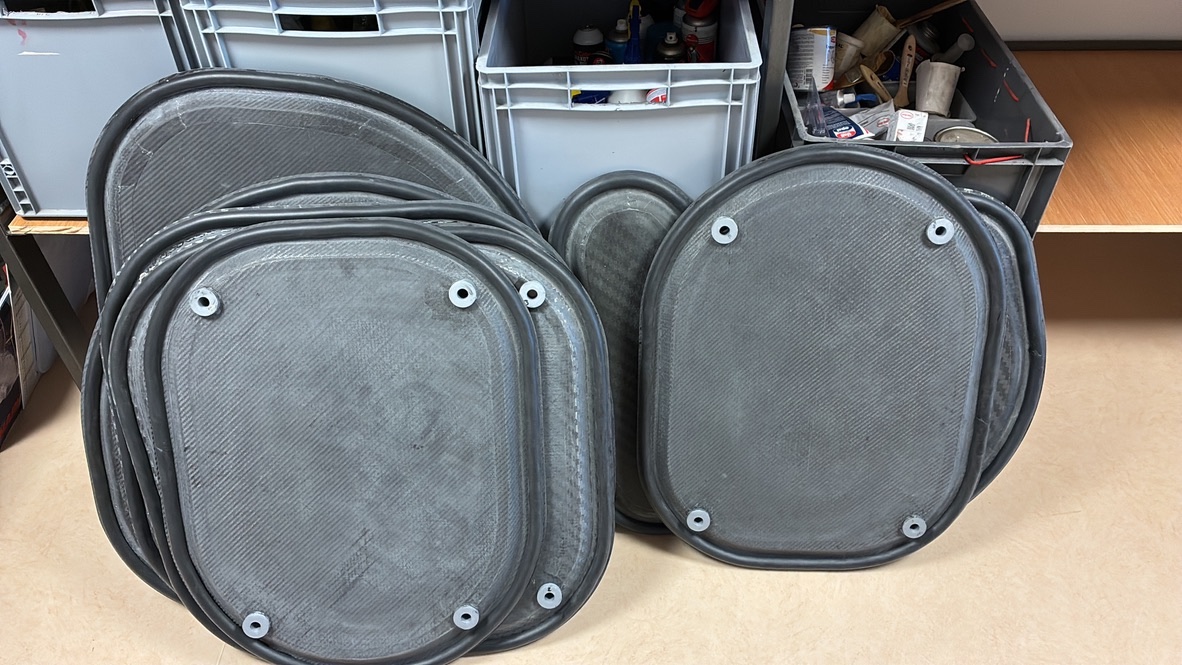
Design Office: parametric 3D modelling in Rhino and dimensioned drawings for manufacturing, design verification against the IMOCA rules, and hands-on composite work — lay-up, bonding and finishing of hatches, waterboxes and structural fittings.
Data: onboard sensor data from the team's Exocet Cloud platform, explored in Grafana and the Sailing Performance Company suite, plus my own sailing tracker that overlays the GPS traces and logged parameters of several boats for debriefs.
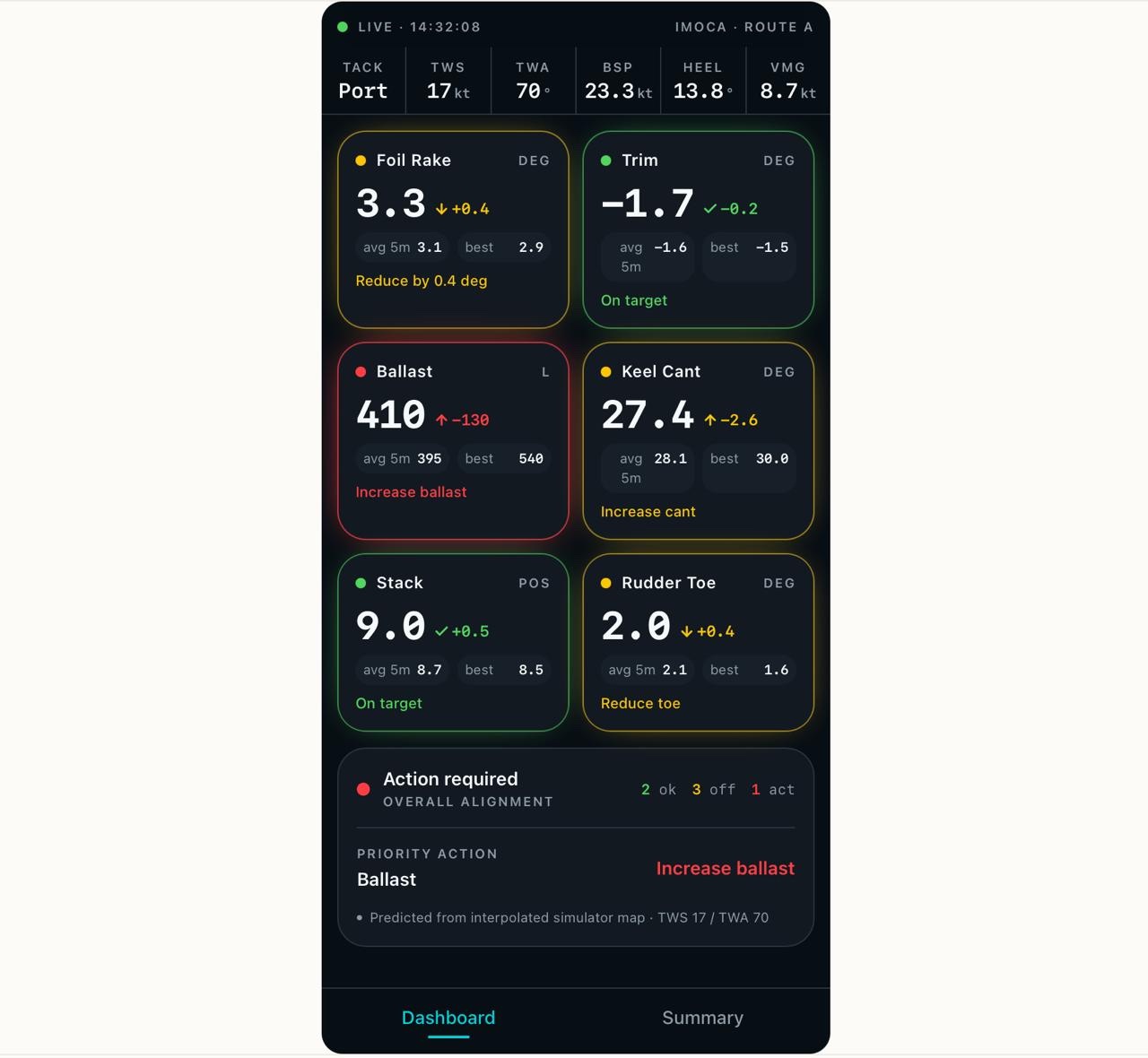
Simulation and controls: automated parameter sweeps and sensitivity studies with GOMBOC, the team's velocity-prediction simulator, feeding a best-settings table for the autopilot.
| Parameter | Value | Note |
|---|---|---|
| Boat | Malizia 4 | IMOCA class, foiling monohull |
| Launch | 6 July 2026 | |
| Design / build | Antoine Koch · CDK shipyard, Lorient | |
| CAD | Rhino | |
| Data | Exocet Cloud · Grafana · Sailing Performance Company suite | |
| Simulation | GOMBOC velocity-prediction simulator | Python sweep and analysis scripts |
| My scope | CAD and drawings · composites · data analysis · autopilot support |
4Key decisions & trade-offs
- 4.1
Aft corner stanchion: minimal part, inside the class rule
The stanchion has to hold the lifelines in two directions under load, meet the IMOCA height requirements and stay as light as possible. The design combines rings that carry the lifelines at the required height with a solid rod matching the diameter and wall thickness of the other stanchions; a longer variant guarantees the minimum safety height even when tilted.
- 4.2
Tripline organiser: reuse an existing mould
Non-flat carbon parts need a mould. Instead of building a new one, I laminated the organiser on the existing toe-rail mould, which had a similar shape — saving time and material while following the proven approach from Malizia 3.
- 4.3
Steering asymmetry: offset or slope?
To investigate a reported port/starboard steering asymmetry, I compared matched sailing sequences on both tacks under near-identical conditions and fitted pilot load against rudder angle per tack. A constant offset would point to a sensor; a slope difference points to a structural or hydrodynamic cause. The data showed the latter, so I recommended moving from further data analysis to physical inspection.
- 4.4
Automate the simulator, then test how robust its answers are
Single simulator runs are slow, so I scripted multi-parameter and Latin-hypercube sweeps that ran unattended overnight, scored each run on the relevant target (VMG, distance made good or boat speed) and filtered out unrealistic heel. Sensitivity studies then showed that robustness varies strongly by point of sail — so the onboard best-settings table needs finer resolution only where the optimum is fragile.
5Results
- Parts I designed or built, now on board Malizia 4: the aft corner stanchions, the front pit frame and tripline organiser, the onboard steps, and the finished carbon hatches and waterboxes.
- A self-built sailing tracker used in debriefs with the team's sailors and other skippers, and Grafana dashboards for analysing offshore data.
- A best-settings table derived from the simulator, a concept for a live best-settings app, and support in setting up autopilot presets for six sailing conditions.
6Media